 Viewed: 43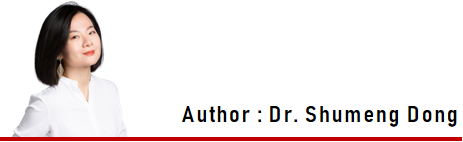
This article is translated from the Chinese-language original of
Commentary on China's Wine Industry, Volume 1.
In recent years, the Chinese wine industry has been frequently discussing issues such as "sluggish consumption", "high inventory backlog" and "young people do not drink wine". A large number of analysis reports, industry forums and professional interpretations have emerged in an endless stream, yet a realistic trend has become increasingly clear: the Chinese wine sector does not lack professional knowledge, but is trapped by knowledge itself.
The so-called "Curse of Knowledge" refers to a cognitive bias that once professionals have mastered a complex system, they can no longer easily understand problems from the perspective of ordinary people. This phenomenon is particularly prominent in the Chinese wine industry. We talk extensively about terroir, single vineyard, oak barrel fermentation, yeast strain selection and aging potential, cite the classification systems and historical traditions of France, Italy and Spain, but gradually ignore the most fundamental question: do ordinary Chinese consumers really need all these professional concepts?
From the perspective of market reality, China is not a society that takes wine as a daily beverage. For consumers of Baijiu and beer, drinking behavior is more of a social activity, emotional regulation or living habit, rather than the result of deliberate "aesthetic training". However, for a considerably long period, the development path of Chinese wine has highly relied on the logic of "educating the market": explaining producing regions, grape varieties, professional scores and international awards, as if consumers will definitely fall in love with wine once they master these professional knowledge points.
The core problem lies in that this development path itself carries a strong industry-perspective bias. It defaults that consumers should first understand wine before they are qualified to drink it. But in the real market, almost no mass consumer product has ever achieved popularization by requiring users to "take classes first".
What is more worthy of reflection is that many domestic wine brands deliberately lean towards "professional aesthetics" in brand building, but completely ignore "daily life scenarios". Their label designs imitate European styles, marketing copies are full of foreign languages and technical jargon, while the price system is far beyond the range of daily consumption. As a result, these wines have neither truly entered the high-end collection market, nor become a regular choice on the dining tables of ordinary families.
This is exactly the industrial manifestation of the "Curse of Knowledge" — producers and practitioners know too well what wine "should be like", but completely forget what consumers "actually want".
In fact, the Chinese market does not lack potential demand for wine, but lacks "wine that can be understood by consumers". What consumers really care about are often more intuitive questions: does it taste good? Is it suitable to pair with Chinese food? Will it cause an unpleasant hangover? Is the price worth it? Is it a proper gift option? Can it be accepted in a relaxed casual occasion?
When the industry indulges in "professional narratives", these practical questions are even regarded as "not advanced enough". But it is precisely these "non-high-end" demands that determine whether an industry can truly expand its consumer base.
Returning to the mass market of ordinary Chinese people does not mean abandoning quality, negating technology, nor "compromising to the low-end market". It means switching to a brand-new logic: no longer screening consumers with professional knowledge, but making products adapt to daily life scenarios.
This transformation requires several fundamental shifts. First, shift from "educating consumers" to "serving consumers", making wine a supporting role in daily life rather than the protagonist of professional knowledge. Second, shift from "benchmarking against Europe" to "understanding China", and truly respond to local dietary and social culture in terms of taste, price, packaging and usage scenarios. Third, shift from "industry self-appreciation" to "market validation", taking consumers' real choices as the only criterion to judge success.
The way out for Chinese wine may not lie in making professional narratives deeper, but in making expressions more straightforward; not in making consumers more professional, but in making wine more daily. Only when the industry truly walks out of the "Curse of Knowledge", can Chinese wine get close to the Chinese people again.
Reference
Camerer, C., Loewenstein, G., & Weber, M. (1989). The curse of knowledge in economic settings: An experimental analysis. Journal of Political Economy, 97(5), 1232–1254.
Lockshin, L., & Corsi, A. M. (2012). Consumer behaviour for wine 2.0: A review since 2003 and future directions. Wine Economics and Policy, 1(1), 2–23.
Liu, F., & Murphy, J. (2007). A qualitative study of Chinese wine consumption and purchasing: Implications for Australian wines. International Journal of Wine Business Research, 19(2), 98–113.
OIV. (2025). State of the world vine and wine sector in 2024. International Organisation of Vine and Wine.
Hu, D., Ding, Y., & Zeng, Y. (2025). Sustainable wine preferences in China: Scenario-specific insights for self-consumption and gift-giving. Frontiers in Sustainable Food Systems, 9, Article 1615703.
Author's Bibliography
Currently as a doctoral candidate. Shumeng Dong is e works at the Marketing Teaching and Research Office, College of Wine Science, Northwest A&F University. She serves as a consultant for the Wine Culture and Tasting Center of Northwest A&F University, Deputy Secretary-General of the Wine Professional Committee of the Chinese Poetry and Wine Culture Association (a national first-level professional social organization), a lecturer at the Queen Mary Engineering College of Northwestern Polytechnical University, the MBA & EMBA Center of Xi'an Jiaotong University, and a practical lecturer for the CBL program at EM Lyon Business School. She graduated from the Burgundy School of Business in France, majoring in International Trade of Wines and Spirits. She has participated in compiling the 14th Five-Year Plan general higher education undergraduate planning textbook Wine Hygiene, the special project World Wine Classification under the Development and Reform Program of the Ministry of Science and Technology, and other works. She has published multiple papers and presided over a number of teaching reform projects such as "Curriculum Construction of Wine Marketing and Quality Improvement of Talent Training".