 Viewed: 191
This article is translated from the Chinese-language original of
Commentary on China's Wine Industry, Volume 1.
When the global wine industry's discourse is dominated by mainstream international grape varieties and standardized cultivation models, China's cold-climate wine regions are facing an ultimate interrogation of "terroir adaptation". The traditional practice of burying vines for winter protection is not only a "lifeline" for grapevines to survive the winter in northern China, but also a unique regional terroir feature. However, it has become a "tight curse" restricting the cost reduction, efficiency improvement and large-scale upgrading of China's wine industry.
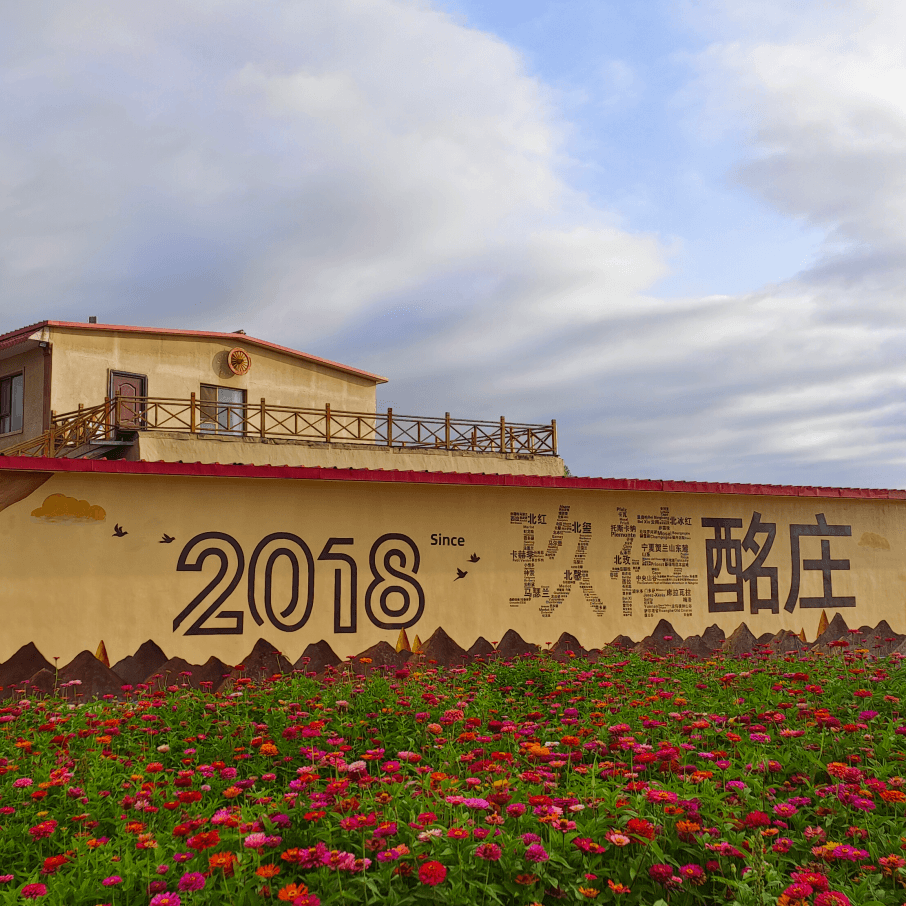
As one of the few domestic wineries fully focused on the development of highly cold-resistant, non-buried overwintering grape varieties, Ningxia Jiuxi Winery introduced nationally approved high-cold-resistant wine grape varieties of the "North" series such as "Beihong" and "Beimei" from the Institute of Botany, Chinese Academy of Sciences. After 15 years of in-depth cultivation in this field, it has torn open a breakthrough for China's wine industry through technological innovation at the planting end.
This planting-end breakthrough, which originated in the Shizuishan sub-region at the northernmost tip of the Helan Mountain East Foothill in Ningxia, is not a single winery's technical trial and error. It may become one of the practices for China's wine industry to break away from path dependence and build a local characteristic system. By rationally analyzing the industrial value of this exploration, we have the opportunity to find a breakthrough path for the future development of China's cold-climate wine regions.
For a long time, in wine regions such as Ningxia, Xinjiang and Gansu, the processes of vine removal for burial in winter and vine exposure for shoot growth in spring require 300 to 500 yuan of labor cost per mu, accounting for about 30% of the annual total production labor, which is extremely costly. The non-buried overwintering varieties planted by Jiuxi Winery can safely survive the winter at temperatures ranging from -20°C to -30°C, directly eliminating the costs of vine burial and exposure. With key cultivation technologies, the annual planting cost per mu can be reduced by about 50%.
At the ecological level, the non-buried overwintering model also avoids the damage to soil structure caused by repeated tillage. The deeply rooted grapevines maintain the ecological stability of the vineyard, while reducing the energy consumption and carbon emissions of agricultural machinery, which is in line with the current development trend of green agriculture. More far-reaching is its industrial value: it breaks the inherent cognition that "international varieties equal high quality". By guiding wineries to focus on the cultivation of local characteristic varieties, on the one hand, it can reduce the dependence on international varieties; on the other hand, it can establish confidence in local varieties, promoting China's wine industry to transform from "following the trend" to "independent innovation".
At present, the technological innovation of cold-resistant, non-buried overwintering varieties at Jiuxi Winery has achieved phased success, but it still faces the practical dilemma that "successful experiments do not equal large-scale implementation". The core key to successful promotion lies in its replicability under large-scale planting. Against the background of frequent global extreme climates, early bud break in spring makes grapevines vulnerable to late frost damage, and the seedling stage requires meticulous management, resulting in extremely low technical fault tolerance. After 15 years of research on the biological characteristics of grapevines in the low-temperature environment of northern Ningxia, Jiuxi Winery innovated key planting technologies such as delayed late pruning, and formed its own comprehensive supporting cultivation system, which ensures that grapevines can safely survive the winter without burial even at low temperatures. However, the existing supporting technical system is only based on the careful management and key technical support of Jiuxi Winery's demonstration vineyard, and its stability in large-scale planting still requires long-term verification.
More critically, there is the terroir adaptation challenge. When the cultivation experience derived from Jiuxi Winery's selenium-rich soil and special climate is replicated to other cold-climate wine regions, it may face problems such as insufficient variety adaptability and unbalanced flavor performance. The time and capital cost of localized technology adjustment will become the core obstacle to large-scale promotion. Furthermore, the transformation of technological advantages must cross the dual thresholds of market cognition and product positioning, which is exactly the core test that Jiuxi Winery must face.
At present, China's domestic wine consumption market is still dominated by international varieties such as Cabernet Sauvignon and Merlot. The market awareness of local cold-resistant varieties such as "Beihong" and "Beimei" is almost zero. The author once interviewed the person in charge of the winery, who frankly stated that cold-resistant varieties are not popular in the industry, mainly because consumers' inherent cognition is difficult to break through. To promote new varieties, a large amount of resources need to be invested in market cultivation, conveying their characteristics and advantages through activities such as tasting sessions and regional experience tours. However, this process has a long cycle and slow return. In the future, how to maintain cost advantages while continuously optimizing winemaking processes, fully tapping the quality characteristics of local cold-resistant varieties, enhancing brand influence, and avoiding falling into the misconception of low-price competition is the key to breaking through the market.
The innovation of cold-resistant, non-buried overwintering varieties at Ningxia Jiuxi Winery is a vivid epitome of China's wine industry taking root in its local context and independently exploring. This revolution at the planting end can resolve long-standing industrial pain points to a certain extent, but it also exposes multiple challenges faced by local innovation. The rise of China's wine industry has never been "copyism" that replicates international models, but "localism" that is based on terroir and deeply cultivates innovation.
Only when Chinese wine can establish a firm foothold with local varieties, local technologies and local brands can it win a unique right to speak in the global wine industry landscape and embark on a high-quality development path that combines distinctive features and competitiveness.
Reference
Jiao, H., Liu, A., & Xie, C. (2022). Research summary of winemaking grape varieties Beimei and Beihong in Ningxia production area. Farm Products Processing, (12), 104-105+108.
Ma, J., Liu, C., Shan, S., Lei, H., Li, Y., & Shao, J. (2023). Comparative analysis of aroma components of wines made from four non-buried overwintering grape varieties in the eastern foothill of Helan Mountain. Sino-Overseas Grapes & Wine, (01), 24-31.
Wang, J. (2024, December 11). Breeding high-quality varieties to create "Ningxia-flavored" wine. Ningxia Daily, p. 007.
Yang, Y., Zhang, X., Chen, R., Ding, Q., Feng, R., Li, F., & Fan, J. (2021). Identification of cold resistance of branches of four winemaking grape varieties in the eastern foothill of Helan Mountain. Journal of Arid Land Resources and Environment, 35(03), 183-189.
Zhang, Y. (2023). Terroir research of Gezishan sub-wine region in the eastern foothill of Helan Mountain based on soil and variety characteristics (Master's thesis, Northwest A&F University).
Author's Bibliography
PhD in Hotel and Tourism Management, The Hong Kong Polytechnic University; Master of Tourism and Hotel Management, School of Business Administration, Sun Yat-sen University. She holds an associate senior professional title, is a senior dual-qualified teacher, and was selected into the "Ten Thousand Tourism Talents" Program initiated by the former China National Tourism Administration.
With 20 years of frontline teaching experience in vocational education for the High-Star Hotel Operation and Management specialty, and over 15 years of dedication to wine vocational education and professional training, Dr. Xia has obtained multiple internationally recognized professional wine certifications, including the WSET Level 3 Advanced Award in Wines (UK) and the ISG Advanced Sommelier Qualification (USA). She has led and participated in nearly 10 national and provincial research projects, and was awarded the Second Prize of the National Teaching Achievement Award. Her academic publications include 1 officially published academic monograph and 2 textbooks, and she also owns 1 industrial design patent and 2 computer software copyrights. She has been invited to deliver keynote speeches at industry events on multiple occasions, and has served as a judge and executive director for major competitions in the wine and beverage industry.